📡 The Big Story

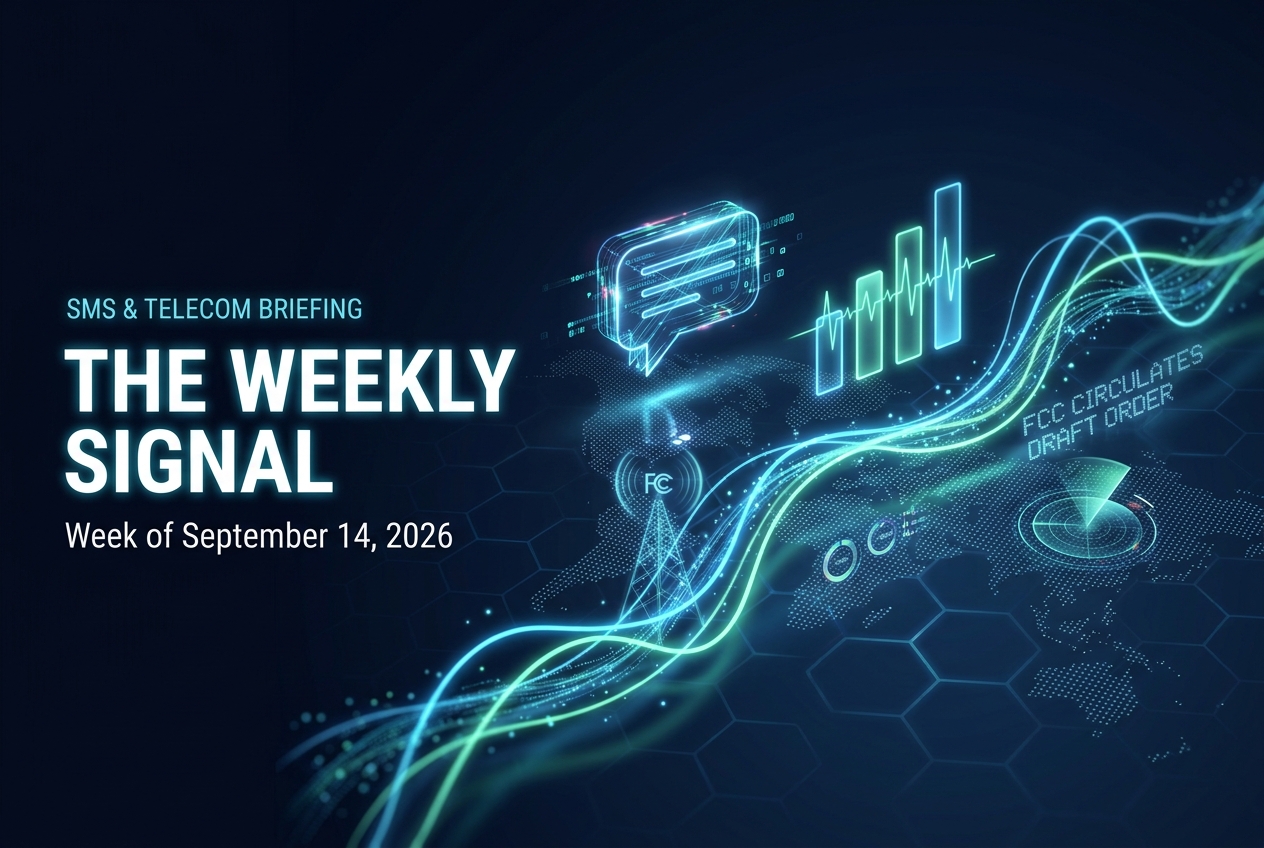
The FCC just circulated a draft Report and Order that rewrites the TCPA consent revocation framework, with a Further NPRM stapled to the back teeing up another round of obligations. It's on the agenda for the September 30 open meeting. If you run any outbound texting program, you are about to re-paper your entire opt-out stack. Again. CommLaw Group has the breakdown.
Here's the thing about revocation rules: they sound boring until you realize they're the single highest-volume compliance surface in messaging. Every "STOP" is a legal event. Every "please stop texting me lol" that your keyword parser didn't catch is a potential $500 statutory violation, trebled to $1,500 if someone decides it was willful. The 2024 rules already said revocation has to be honored in any reasonable manner, through any reasonable medium, within 10 business days. Now the Commission is reopening that framework, which means every assumption your platform baked in over the last two years is back in play.

And the FNPRM is the part nobody's talking about enough. A Report and Order settles what's happening. A Further NPRM says "and we have more ideas." Reading those two documents together, the direction is obvious: the FCC is not done, and the compliance burden is going up, not down. My read is that the smart move isn't waiting for September 30 to see what lands. It's auditing your revocation logs right now, because whatever version of the rules survives, you're going to be asked to prove you honored an opt-out on a specific date, and "our system does that automatically" is not evidence. Logs are evidence.
🔥 What's Moving
Carriers Tell the FCC Its China Ban Might Accidentally Sever the Global Internet 👀
The comment record closed this week on the Chinese telecom ban, and the fight isn't about whether state-linked carriers are a security risk. Everybody agrees they are. The fight is about the word "interconnection." US operators are warning that a broad reading would cut legitimate international routing paths, which is a polite way of saying your A2P traffic to half of Asia stops working.
This is the most operationally disruptive rulemaking of the decade and almost nobody outside of carrier regulatory teams is paying attention. If you send international SMS, your termination economics run through routes that touch infrastructure this order could reclassify overnight. Ask your aggregator which of your international routes have a Chinese-operator hop in them. If they can't answer in under a day, that's the answer.
Infobip Launches RCS BusinessOS, Aims Straight at the Carrier Control Plane 🔥
On September 10, Infobip shipped RCS BusinessOS, an operating layer that lets mobile operators launch, govern, monetize, and run RCS for Business without building the commercial stack themselves. Brand onboarding, traffic governance, the whole thing.
Read that again, because it's not an aggregator product. It's an operator platform. Infobip is climbing up the stack to sit between the carrier and everyone else, which means the RCS land grab was never really about who sends the most rich messages. It's about who owns the control plane that decides which brands get onboarded and what they pay. Whoever wins that seat gets to set the rules for a decade. Twilio built the developer layer and let carriers keep the plumbing. Infobip is going for the plumbing. Bold, and I think correct.
Concora Credit Pays $9.375M for Prerecorded Calls 💀
Nine point three seven five million dollars, with class members collecting $250 to $650 each. Consumer lending remains the plaintiff bar's favorite hunting ground, and prerecorded outreach remains the thing that gets you there.
The number matters more than the case. Settlements are benchmarks, and benchmarks are what opposing counsel quotes at you in mediation. Every TCPA demand letter written between now and next spring will reference this figure. Budget accordingly.
The FCC's Accessibility Rules Now Reach Your Live Chat Widget 😴… just kidding, 👀
Nelson Mullins flagged something most of the industry has ignored: messaging and live chat interfaces can fall under FCC accessibility obligations. Everyone's been treating ADA and CVAA exposure as a website problem handled by the frontend team. It isn't. If your chat widget or messaging interface isn't accessible, that's a regulatory vector, not just a design complaint.
I wanted to rate this one 😴 and I can't. It's the kind of thing that sits quietly for two years and then shows up as a demand letter with your CPaaS vendor named alongside you.
DIDWW Adds Croatia, Romania, Belgium, and Norway 👀
DIDWW hit 53 countries for A2P SMS on September 9. Small news, real signal. Infrastructure providers are buying direct European coverage instead of routing through wholesale intermediaries, because the intermediaries are exactly where traceability goes to die. Direct routes cost more and survive audits. Guess which one matters more in 2026.
🏆 Winner of the Week: Infobip, for realizing the RCS fight is about who onboards the brands, not who sends the messages.
📉 Loser of the Week: Every compliance team that's about to spend Q4 rebuilding opt-out handling for the second time in two years instead of shipping anything.
📊 By the Numbers
- $9.375M / $250 to $650 per class member. That's the Concora Credit math. At the low end, you'd need roughly 14,000 class members to hit the fund. At $500 statutory per violation, this settlement is what "we'll fix consent later" costs.
- 53 countries. DIDWW's A2P footprint after adding four European markets in one announcement. For context, they operate voice and messaging in 90+ countries, so A2P coverage still trails their overall footprint by almost 40 markets. Direct A2P interconnects are genuinely hard to get.
- 16 days. That's how long you have between now and the September 30 open meeting to get your revocation logging in order. Not your policy document. Your logs.
🔮 What We're Watching
September 30, obviously. The draft order is circulated, which means the substance is mostly locked. What I'm watching is the FNPRM's question set, because that tells you where the Commission's head is for 2027. If it asks about automated revocation confirmation or cross-channel opt-out propagation, that's a two-year engineering roadmap landing in a footnote.
How the interconnection scope lands. The record's closed. Now we wait to see whether the FCC writes "interconnection" narrowly or broadly. Narrow means a compliance exercise. Broad means international A2P routing gets redrawn, and a lot of quoted rates stop being real.
💡 The Hot Take
Here's my bold one: the RCS land grab is going to be won by whoever owns compliance, not whoever owns the richest feature set.
Everyone spent the last three years demoing carousels and verified sender badges like the product was the point. It isn't. Look at what actually moved this week. A revocation rewrite, a $9.375M settlement, accessibility rules reaching chat widgets, an interconnection order that could sever international routes, and one company shipping a governance platform for operators. Four of those five stories are compliance stories. The fifth one is a compliance product wearing a messaging product's jacket, and I think Infobip knows it.
The prediction: within 18 months, the primary reason a brand switches messaging platforms won't be price or deliverability. It'll be that their current vendor couldn't produce an audit trail when the regulator, or the plaintiff's firm, asked for one. Carriers will start treating governance tooling as table stakes for RCS onboarding, and every CPaaS that treated compliance as a checkbox feature owned by legal is going to find out it was the product all along.
Boring wins. It always does. See you next week.