Here's what happens in the real world. Someone fills out your lead form at 9:42pm on a Tuesday, probably from their couch, probably while a TV show is paused in the background. They hit submit. And then... nothing. Maybe an email lands in a folder they never check. Maybe a sales rep sees it the next morning and calls at 10am, by which point the buyer has forgotten what site they were even on. That gap, the one between submission and response, is where most lead form SMS strategies fail before they even start.
I've watched this pattern play out across industries for long enough to have an opinion about it: intent decays fast, and most companies treat follow-up like a scheduling problem instead of a speed problem.
Lead Form SMS Works Because Intent Peaks and Then Falls Off a Cliff

The moment right after someone submits a lead form is the highest-intent moment you'll ever have with that person. They were thinking about your product, they typed in their number, they clicked the button. Then their phone buzzes with a group chat notification, or their kid walks in, or they open a different tab, and that intent starts evaporating.
This is the core idea behind speed to lead: the faster you respond, the more of that original intent you capture. Wait an hour and you're talking to a cooler, more skeptical version of that person. Wait a day and you're often talking to nobody, because they've already filled out three other forms and bought from whoever answered first.

A text message is uniquely suited to this moment because it doesn't require the buyer to do anything. No app to open, no email to dig out of spam. It shows up where they already are.
What a Fast SMS Confirmation Actually Does
A good automated text isn't just "thanks for your submission." It does three jobs at once:
- Qualifies intent by asking a quick follow-up question (timeline, budget range, which product variant they want)
- Sets expectations about what happens next and when
- Moves the buyer forward with a clear next step, whether that's a calendar link, a call-back window, or a direct answer
Why This Beats a Generic Autoresponder
A generic "we got your message" text doesn't do any of that work. It just confirms receipt, which the buyer already assumed happened. The goal of SMS lead follow up isn't to acknowledge the form. It's to keep the conversation moving while the buyer is still paying attention.
Bad Lead-Form SMS Is Generic. Good Follow-Up Reflects the Form.
I'll say something that might sound obvious but gets ignored constantly: if your follow-up text doesn't reflect what the person actually submitted, it reads as spam, even if it technically isn't.
If someone filled out a form for a home insurance quote, the text shouldn't sound identical to the one a car-buyer gets. It should reference the vertical, the specific offer they clicked on, and ideally something from the form itself, like a city, a product name, or a requested callback time. That specificity is the difference between "a human or a smart system is actually tracking what I asked for" and "this is a template with my first name dropped in."
Consent language matters here too. If the form captured SMS automation opt-in language specific to a campaign or vertical, the first text needs to match that consent scope exactly. Sending a generic marketing blast when the buyer only opted into appointment reminders is both a bad experience and a compliance risk. The compliance and security side of texting isn't optional paperwork, it's part of the actual product.
One Flow: Form, SMS, Voice, and Compliance Together
This is where most companies run into a wall. The lead form lives in one tool, the SMS platform is a separate vendor, the voice follow-up (if there is one) runs through yet another system, and compliance monitoring is a spreadsheet somebody updates once a month. None of these pieces talk to each other, so the "fast follow-up" everyone wants on paper takes 45 minutes in practice because a human has to manually move data between systems.
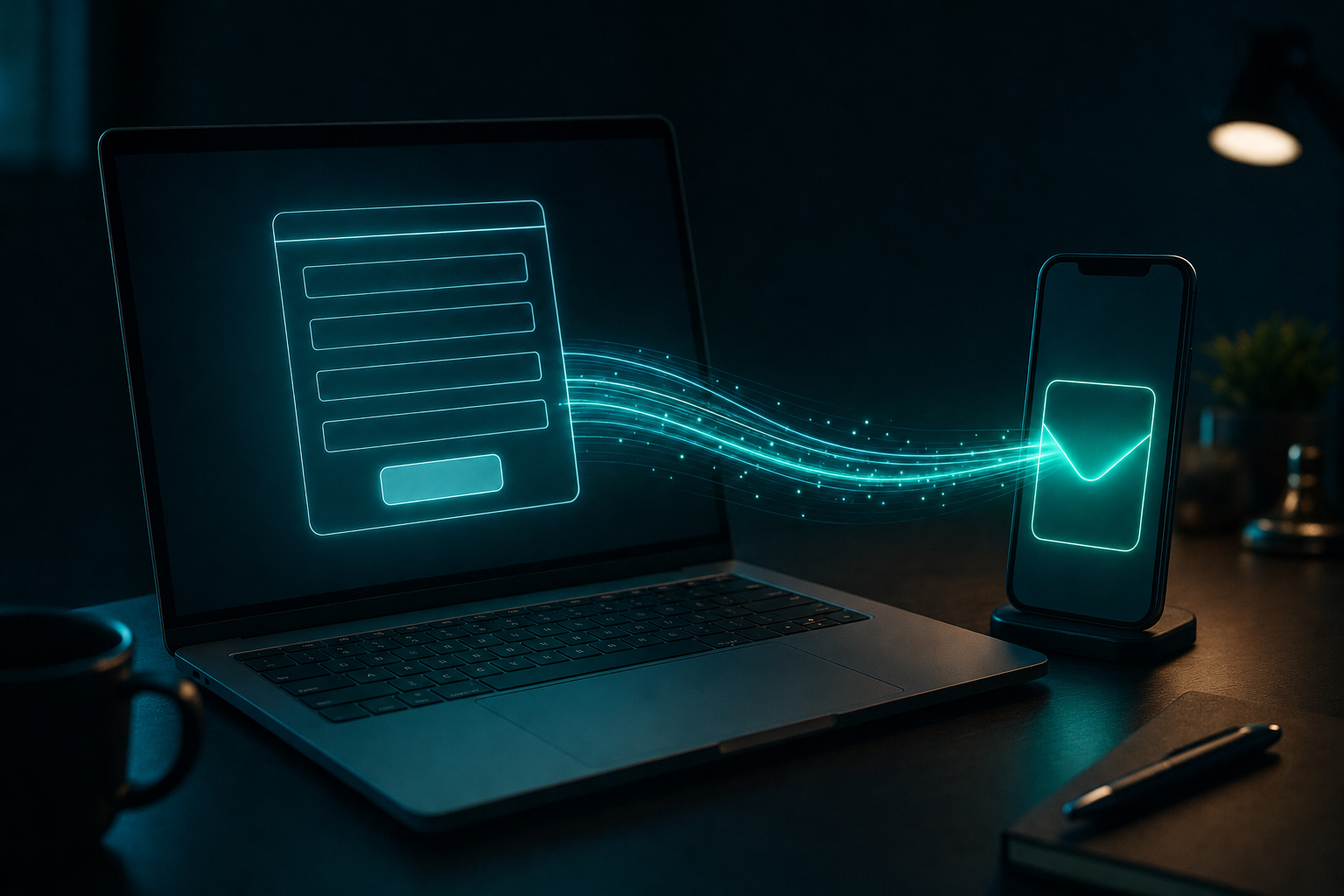
Tells connects all of it into one flow. A form submission triggers Tells SMS automation instantly, routes to Tells Voice AI if the buyer wants a call instead of a text thread, and logs everything through compliance monitoring so there's a clear record of consent and timing. No stitching together a multi-vendor stack of tools that each do one piece of the job. One system, one timeline, one source of truth for what was sent, when, and why.
Why This Matters for Lead Conversion
When the systems are connected, the sequence can actually branch based on what the buyer does. No reply to the text in 10 minutes? Trigger a voice call. Replied with a question? Route to a live agent. That kind of branching logic is nearly impossible to build reliably across disconnected tools, but it's the thing that actually moves lead conversion numbers, because it meets the buyer wherever they are instead of forcing them into one channel.
If you want a deeper look at how this plays out across different industries, the industries page breaks down vertical-specific examples, and solutions covers how the pieces fit together technically.
What to Audit in Your Own Follow-Up Sequence
Before assuming your lead-to-SMS flow is working, check a few things:
- How many minutes pass between form submission and first text, on average?
- Does the first message reference the specific form or offer, or is it generic?
- Does consent language in the text match what was collected on the form?
- What happens if the buyer doesn't respond? Is there a next step, or does the thread just end?
Most teams find the slow spot isn't the SMS itself, it's the handoff between systems that should be instant and isn't.
Frequently Asked Questions
How fast should an SMS follow-up be sent after a lead form submission?
As close to instant as possible. Industry guidance on speed to lead consistently points to the first few minutes as the window where buyer intent is highest, so automated, immediate texting beats manual, delayed outreach in almost every case.
Is lead form SMS legal and compliant?
Yes, as long as the message matches the consent language captured on the form. Organizations like the CTIA and the FCC publish guidance on messaging consent, and following it closely is non-negotiable for any SMS lead follow up program.
What makes lead-form SMS feel generic versus personalized?
Generic SMS confirms receipt without referencing what was actually submitted. Personalized follow-up reflects the vertical, the offer, and sometimes details straight from the form, which signals the buyer is talking to a system (or person) that's actually paying attention.
Can SMS and voice AI work together in one follow-up sequence?
Yes. A connected flow can text first and escalate to a voice call if there's no response, or vice versa, depending on what the buyer prefers and how they engage.
What's the biggest mistake companies make with lead form SMS?
Treating it as a single disconnected message instead of the start of a sequence. A single generic text with no branching logic for replies or non-responses leaves most of the available lead conversion opportunity on the table.
Ask Tells to map your lead form follow-up sequence and find the slow spots.