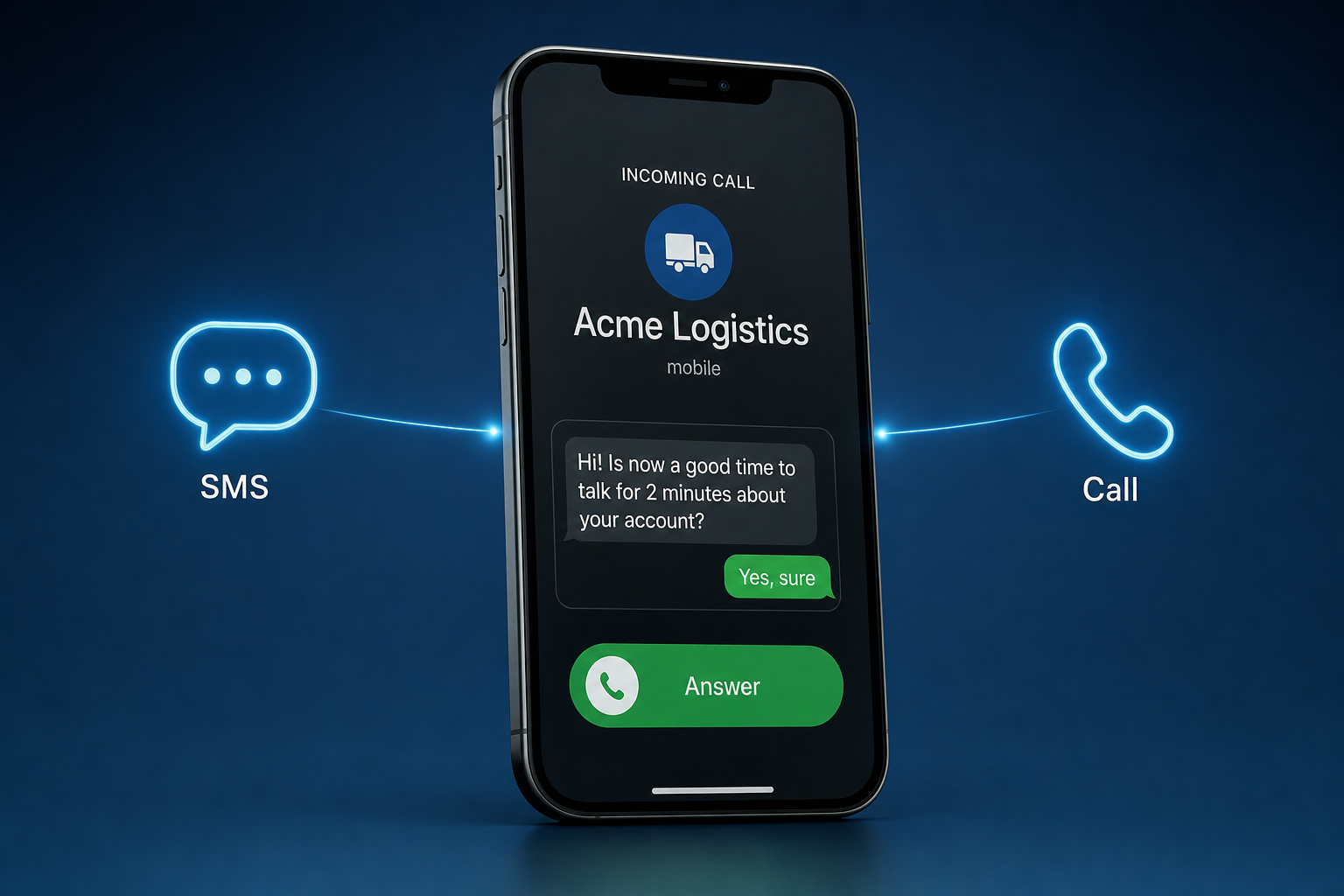
Lead follow-up used to mean a form fill, a delayed call, and a few manual reminders. That approach leaves too much time for the prospect to cool off. Modern follow-up needs to respond while the intent is still fresh.
Start with the lowest-friction channel

SMS is usually the right first move because it is immediate and lightweight. The message should acknowledge the request, confirm context, and offer a natural next step. That might be a question, a scheduling link, a call option, or a quick confirmation that the team is ready.
The goal is not to trap the lead inside a bot. The goal is to make the next step obvious. If the person wants a call, the system should recognize that. If they ask for details, it should respond with useful information. If they are not ready, it should keep the conversation open without becoming annoying.
Use voice when intent is high

Calls still matter when the lead is ready to make a decision or needs help from a person. The mistake is calling cold without context. A better workflow lets the lead ask for the call in plain language: call me now, can someone ring me, I am free in five minutes.
Once that intent appears, the system can trigger the handoff. A human team can take the call, or an AI voice agent can qualify, answer, route, or schedule. The key is that the call happens because the lead invited it, not because a dialer guessed the timing.
Use RCS when the next step needs more proof
Some leads need to see before they act. RCS can show images, video, carousels, verified sender identity, and tappable buttons. It is useful when the offer, product, or service benefits from richer explanation.
RCS does not replace SMS or voice. It fills the gap between a short text and a full sales conversation. It gives the prospect enough context to decide whether they want to book, buy, reply, or request a call.
Where Tells fits
Tells brings these pieces into one workflow. SMS handles fast engagement. Voice handles high-intent moments. RCS handles richer proof. AI helps route the conversation without forcing every response through a manual inbox.
The result is not more automation for its own sake. It is faster, cleaner follow-up that gives each lead the next step they actually asked for.